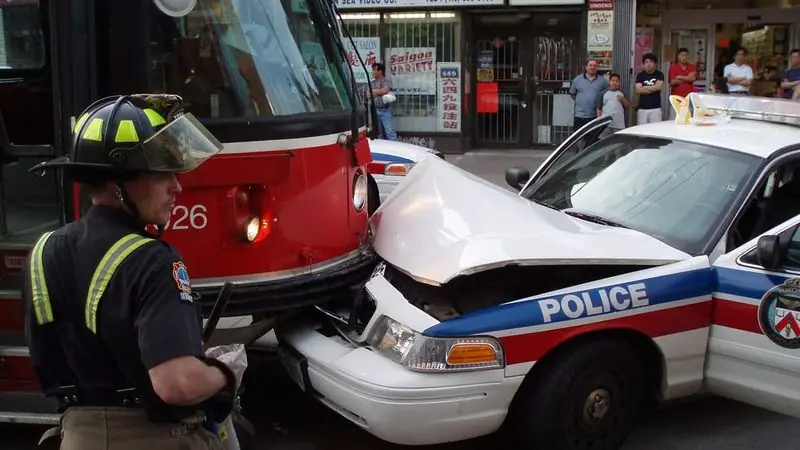
Comparing car accident attorneys in Meriden, CT works best with two tools: reading client reviews for patterns rather than star averages, and scoring each firm on the same criteria after a consultation. A strong candidate is a Connecticut-licensed personal injury lawyer whose reputation holds up on verified reviews, real trial experience, clear contingency fee terms and a record with cases like yours. Most negligence claims must be filed within two years of the injury (Conn. Gen. Stat. § 52-584), so compare two or three firms early. This guide starts with how to read reviews, explains the other signals and ends with a scorecard you can fill in. It is general information, not legal advice.
Legal Disclaimer: Not legal advice. For educational purposes only. This guide is published by an independent information service and is not affiliated with any law firm. For representation, consult a licensed Connecticut attorney.
How to Read Car Accident Attorney Reviews in Meriden
Car accident attorney reviews in Meriden are most useful when you read them for patterns rather than the star average. Look at what clients say about communication, honesty and billing, and how recent and specific the comments are. Reviews are central to any top rated car accident attorney claim, so read them critically.
Where to look: Google Business Profile, Avvo and Yelp. Treat testimonials on the lawyer’s own site as marketing.
Patterns worth noticing:
- Do several reviewers mention being kept informed, or do several complain about not hearing back?
- Do reviewers describe the lawyer, or only the staff?
- Do any mention surprises about fees or costs?
- Does the firm reply to negative reviews calmly?
Signs of fake or incentivized reviews:
- A burst of five-star reviews within days, then nothing.
- Generic praise with no detail about what happened.
- Reviewer profiles with a single review ever.
- Language that sounds copied from the firm’s marketing.
A 4.8 rating from 12 reviews tells you less than a 4.6 from 200. A few mixed reviews are normal. Reviews describe other people’s experiences, and every claim turns on its own facts, coverage and evidence.
What Makes a Top Rated Car Accident Attorney?
A top rated car accident attorney is one whose reputation holds up across several independent, verifiable signals: bar standing, peer ratings, client reviews, relevant case experience and transparent fees. No single badge settles it, and some badges are partly marketing. Here is how the main signals compare:
| Signal | What it tells you | Weight | Main limitation |
|---|---|---|---|
| Good standing with the Connecticut bar | Licensed, no public discipline | Essential | Says nothing about skill |
| Peer ratings (Martindale-Hubbell, Best Lawyers) | How other attorneys view ethics and ability | Moderate | Reflects lawyers’ opinions, not client experience |
| Super Lawyers or similar lists | Selection by nomination and research | Low to moderate | Methodology varies |
| Client reviews (Google, Avvo, Yelp) | Communication, responsiveness | Moderate to high | Can be sparse, incentivized or one-sided |
| Trial experience | Ability to litigate | High | Hard to verify without asking |
| Case results on a website | Examples of past work | Low | Selective; past results do not predict yours |
| Auto accident focus | Familiarity with crash evidence and insurer tactics | High | “We handle everything” firms may dilute it |
Treat ratings as a way to build a shortlist, not a verdict. The conversation with the attorney will tell you more than any badge on a website.
Ratings and Awards: What They Do and Don’t Prove
Ratings and awards show that a lawyer was noticed by peers, a publisher or clients. They do not prove the lawyer fits your case. Each program selects winners differently, so a “highest rated auto accident attorney Connecticut” label means only what that program’s own methodology says it means.
- Martindale-Hubbell has long relied on peer and client feedback. It can signal respect among colleagues, but a good lawyer with little peer visibility may go unrated.
- Avvo has changed its features over the years. Check what its profiles currently display, such as reviews and disciplinary information, rather than assuming a numeric score still means what it once did.
- Super Lawyers and Best Lawyers publish annual lists based on nominations, peer input and sometimes independent research. Being listed does not mean the lawyer was ranked against every other attorney in the state.
Be skeptical of “Top 10 car accident lawyers in Meriden” pages. Many are built by marketing companies or lead-generation sites, and placement can be paid for. If a list does not explain how it ranks firms and who pays for it, treat it as advertising. A search for a top rated car accident lawyer near me will return paid ads alongside real firms, so verify before you trust a label.
Trial Experience vs. Settlement-Only Firms
Most car accident claims settle, but insurers watch whether a lawyer is prepared to go to court. A top rated car accident attorney usually prepares every file as if it may be tried, which tends to strengthen settlement talks even though most cases never reach a courtroom.
That does not mean you want a lawyer who litigates every file. Trials are slow and uncertain. Ask how many car accident cases the attorney has taken to verdict, when, and who would try your case if it did not resolve.
Which court hears a civil case depends on how and where it is filed. Use the Connecticut Judicial Branch court locator at jud.ct.gov and ask the attorney which court would likely handle your claim.
How to Choose a Car Accident Lawyer in Connecticut
To choose a car accident lawyer in Connecticut, verify the license, review disciplinary history, confirm a personal injury focus, find out who will actually handle your file, and compare fee terms and communication across two or three firms. A top rated car accident attorney should welcome each of these checks.
- Check the license. Use the Judicial Branch attorney and firm inquiry to confirm the lawyer is admitted and in good standing.
- Review disciplinary history. The Statewide Grievance Committee pages explain the complaint process and where to find public disciplinary information. An old, minor matter may not be disqualifying, but ask about anything you find.
- Confirm the practice focus. Car accident claims involve insurance coverage layers, medical records and liability disputes. A lawyer who works mostly on personal injury will usually know these better than a generalist.
- Find out who does the work. At some firms, the attorney you meet hands your file to a paralegal or junior associate. That can be fine if explained upfront.
- Compare communication. Note how fast each firm answered your first call. That is often how they will treat you later.
- Get the fee agreement in writing and read it before you sign.
- Compare two or three firms. Consultations are usually free, so there is little reason to hire the first firm you call.
Questions to Ask in a Free Consultation
The most useful questions in a free car accident consultation cover who handles your file, trial experience, fee percentage, case costs, timeline and the weaknesses of your claim. Bring your police report, photos, medical paperwork and insurer letters so the attorney can answer specifically rather than in sales language.
- Who will work on my case day to day, and who will I speak with when I call?
- How many car accident cases like mine have you handled recently, and how many went to trial?
- What is a realistic timeline, and what could slow it down?
- What is your fee percentage, and does it change if a lawsuit is filed?
- How are case costs handled, and what do I owe if there is no recovery?
- What are the strengths and weaknesses of my case, including fault issues?
- What might the claim be worth, and what is that based on? Be cautious of anyone who gives a firm number at the first meeting.
- Does anything in my situation, such as a commercial vehicle, rideshare, uninsured driver or out-of-state party, change the approach?
A good lawyer will answer plainly, including saying “it depends” when that is honest.
Red Flags When Hiring an Auto Accident Lawyer
Red flags when hiring an auto accident lawyer include promises about results, pressure to sign immediately, solicitation at the scene, no written fee agreement, unreturned calls and reluctance to discuss trial experience or discipline. Any one of these is a reason to pause and compare other firms before signing anything.
- Promises about results. No ethical lawyer can promise an outcome or dollar amount.
- Pressure to sign on the spot, especially in a hospital room or your driveway.
- Contact from “runners” or unknown callers soon after a crash. Attorney solicitation is regulated by the Connecticut Rules of Professional Conduct, which you can review through the Judicial Branch website.
- Vague fee terms when you ask about costs.
- Case-mill behavior: huge advertising budgets, intake staff who do all the talking, and no named lawyer.
Best Car Accident Lawyer in Meriden, CT: Local vs. Statewide Firms
The best car accident lawyer in Meriden, CT is not a fixed name but the firm that fits your case on experience, resources and communication. That firm may be a Meriden-area practice, a New Haven or Hartford firm or a statewide firm, and each model has trade-offs.
| Firm type | Typical strengths | Typical drawbacks |
|---|---|---|
| Solo or small local practice | Personal attention, easy to meet | Fewer resources to front expert costs |
| Regional New Haven or Hartford firm | Deeper bench, more trial resources | You may be one of many files |
| Large statewide firm | Can fund experts and long litigation | Higher volume, more staff handling |
Local knowledge counts for something. A lawyer who knows how traffic moves on I-691, Route 66, Route 5 and Chamberlain Highway (Route 71) can think faster about evidence such as nearby cameras and witnesses at local businesses. Serious cases, such as catastrophic injuries or disputed liability, often need expert witnesses, and those cost real money, so ask any firm whether it will fund them.
This guide does not name or rank firms, because no verified data would make a ranking fair. Build your own shortlist:
- Search “car accident lawyer Meriden CT” and note a handful of names.
- Verify each license in the Judicial Branch lookup.
- Read reviews on at least two platforms.
- Check each website for a real focus on auto accident cases.
- Narrow to two or three consultations.
How Much Does a Car Accident Lawyer Cost in Connecticut?
Most Connecticut car accident lawyers work on a contingency fee, meaning the attorney is paid a percentage of any recovery and you owe no hourly fees. In personal injury cases, Connecticut caps that percentage at 33⅓% of the first $300,000 recovered, with lower percentages on larger amounts (Conn. Gen. Stat. § 52-251c).
The statutory caps for personal injury, wrongful death and tort property damage cases (Conn. Gen. Stat. § 52-251c) are:
- 33⅓% of the first $300,000
- 25% of the next $300,000
- 20% of the next $300,000
- 15% of the next $300,000
- 10% of any amount above $1.2 million
These are ceilings, not required rates, so a firm may charge less. Points that often cause confusion:
- Fees vs. costs. The fee is the lawyer’s share. Costs are out-of-pocket expenses such as records, filing fees and expert reports. Ask whether costs come out before or after the fee is calculated, because that changes your net amount.
- If there is no recovery. Some firms absorb costs, while others expect repayment. The agreement should say which.
- Written agreement. Contingency agreements are normally put in writing, and the Connecticut Rules of Professional Conduct govern lawyer fees. Ask for a copy to take home.
- Free consultations. Most personal injury firms offer one, but confirm when you call.
Whether a top rated car accident attorney is worth the fee is a fair question. Because the fee depends on a recovery, you generally pay nothing upfront, but the percentage still affects what you take home. Compare written terms rather than a headline percentage.
Connecticut Car Accident Laws That Affect Who You Hire
Several Connecticut rules shape a car accident claim, which is why many people speak with a lawyer early. These are general summaries, and you can verify current law on the Connecticut General Assembly website or with a licensed attorney.
- Filing deadline. A negligence-based personal injury action must generally be brought within two years from the date the injury is first sustained or discovered (or should reasonably have been discovered), and never more than three years from the date of the act or omission (Conn. Gen. Stat. § 52-584). Claims against a municipality or the state have additional notice requirements and shorter deadlines.
- Modified comparative negligence. Your own fault does not bar recovery if it is not greater than the combined fault of the parties you are seeking recovery from. Otherwise your damages are reduced by your share of fault, and a claimant 51% or more at fault recovers nothing (Conn. Gen. Stat. § 52-572h). Insurers sometimes push fault percentages upward, so the handling of liability evidence can matter.
- Fault matters. Because recovery depends on who was negligent and by how much, proving fault is central to most claims, and the at-fault driver’s liability insurer is typically the first source of payment.
- Minimum liability insurance. Connecticut requires drivers to carry minimum liability coverage, and those minimums can fall short of serious injury losses. Check current required limits with the Connecticut Insurance Department.
- Uninsured and underinsured motorist coverage. Your own policy may include UM/UIM coverage that applies if the other driver has no insurance or too little. A lawyer can review the policy language and your options.
Evidence fades, deadlines run, and early statements to insurers can affect fault arguments. Because a filing deadline applies, speaking with a licensed Connecticut attorney early leaves time to preserve evidence and weigh your options.
What to Do After a Car Accident in Meriden Before You Hire a Lawyer
After a car accident in Meriden, get to safety, call 911 if anyone is hurt, seek medical care, report the crash to police, document the scene and exchange information. Then limit what you tell insurers and avoid signing releases until you understand your injuries and have compared attorneys.
- Seek medical care even if you feel fine, since some injuries show up later.
- Call the police so a report is made. Meriden police or State Police may respond, depending on the location.
- Exchange information: names, phone numbers, insurance details, license plates.
- Take photos of vehicles, the scene, road conditions and visible injuries, and get witness contact details.
- Be careful with the other driver’s insurer. Think twice before giving a recorded statement without advice.
- Keep records: medical bills, repair estimates, missed work and a simple symptom log.
- Stay quiet on social media about the accident. Posts can be taken out of context.
- Do not accept a quick settlement before you understand your injuries.
Compare Your Shortlist: A Simple Scorecard
A scorecard helps you compare firms on the same criteria instead of choosing whoever sounded most confident. Score each item from 1 (weak) to 5 (strong) after your consultations, whether you are weighing a local practice or a possible top rated car accident attorney from a larger firm.
| Criterion | What to check | Firm A | Firm B | Firm C |
|---|---|---|---|---|
| Licensing and discipline | Good standing, no unexplained complaints | |||
| Ratings and awards | Methodology understood, not pay-to-play | |||
| Client reviews | Recent, detailed, on two or more platforms | |||
| Trial experience | Specific examples of cases tried | |||
| Car accident focus | Share of caseload, similar cases | |||
| Communication | Response speed, clear explanations | |||
| Fee terms | Percentage, costs, written agreement | |||
| Gut check | Did you feel heard and respected? |
For many people, communication, trial experience and fee transparency count for more than awards. Do not pick on total score alone, and take any red flag seriously.
Important Disclaimer
This article is informational content from the Editorial Research Team at Connecticut Car Accident Lawyers Guide, an independent information service. It is not legal advice, and reading it does not create an attorney-client relationship. Laws, deadlines and insurance rules change and apply differently depending on your facts. Past results of any lawyer do not guarantee a similar outcome. This guide does not endorse or rank any firm. For advice about your situation, consult a licensed Connecticut attorney.
FAQ
How do I find the best car accident lawyer in Meriden, CT?
Shortlist two or three Connecticut-licensed personal injury attorneys using verified reviews, peer ratings and trial experience. Then use free consultations to compare communication and fee terms. Confirm each license with the Connecticut Judicial Branch before you meet. “Best” depends on fit with your case, not a single ranking.
How do I choose a car accident attorney?
Prioritize a focus on car accident cases, real trial experience, consistent client reviews, a transparent contingency fee in writing, and clarity about who will handle your case day to day. Walk away from anyone who promises a specific result.
Is a top rated car accident attorney worth the cost?
Contingency fees mean you generally pay no upfront legal fee, and stronger representation can influence how a claim is handled, though no outcome is certain. Fees in personal injury cases are capped by statute (Conn. Gen. Stat. § 52-251c). Compare fee and cost terms in writing, since those determine what you receive.
How much does a car accident lawyer charge in Connecticut?
Typically a contingency fee. Connecticut caps it at 33⅓% of the first $300,000 recovered, 25% of the next $300,000, 20% of the next $300,000, 15% of the next $300,000 and 10% above $1.2 million (Conn. Gen. Stat. § 52-251c). Case costs are handled separately, so get the terms in writing.
How long do I have to file a car accident claim in Connecticut?
A negligence-based personal injury action must generally be filed within two years of when the injury is first sustained or discovered, and never more than three years after the act or omission (Conn. Gen. Stat. § 52-584). Claims against a municipality or the state have additional notice requirements and shorter deadlines.
Can I trust online car accident attorney reviews?
They are useful but imperfect. Look for detailed, recent reviews across several platforms, and be wary of incentivized reviews, suspiciously uniform praise or sudden bursts of five-star ratings. Read the negative reviews and the firm’s responses too.
Do I need a lawyer for a minor car accident in Connecticut?
Not always. If there are no injuries, fault is clear and the damage is small, you may handle it with the insurer. Consider a consultation if there are injuries, disputed fault, an uninsured driver or a low settlement offer. Fault shares can reduce or bar recovery (Conn. Gen. Stat. § 52-572h).
What is the difference between a car accident lawyer and a general personal injury lawyer?
A car accident lawyer concentrates on auto claims, insurance coverage issues and crash evidence. Many personal injury lawyers handle car accidents along with other injury cases, which can work well. Ask how many auto accident cases the lawyer has handled recently to judge their experience.